

The difference between an enthusiastic amateur who recognises a good glass and a professional who truly brings a wine list to life isn’t in pure talent, but in the depth of their training. For many, the step to SVH Wine 3 is therefore the crucial moment when passion transforms into true mastery. You probably recognise the slight doubt about the difficulty of the theory or that healthy tension for the organoleptic component, where you have to taste blind. It’s perfectly logical to wonder if your current knowledge already aligns with this level.
In this article, you’ll discover everything you need to know to confidently achieve the official wine diploma. We’ll discuss the full curriculum, the structure of the examination, and how this qualification opens the door to the prestigious oenologist training. You’ll learn how to advise guests on complex wine-food pairings and exactly what’s expected of you during the 45 minutes of the theory examination. This complete overview provides the clarity you need to elevate your career in gastronomy.
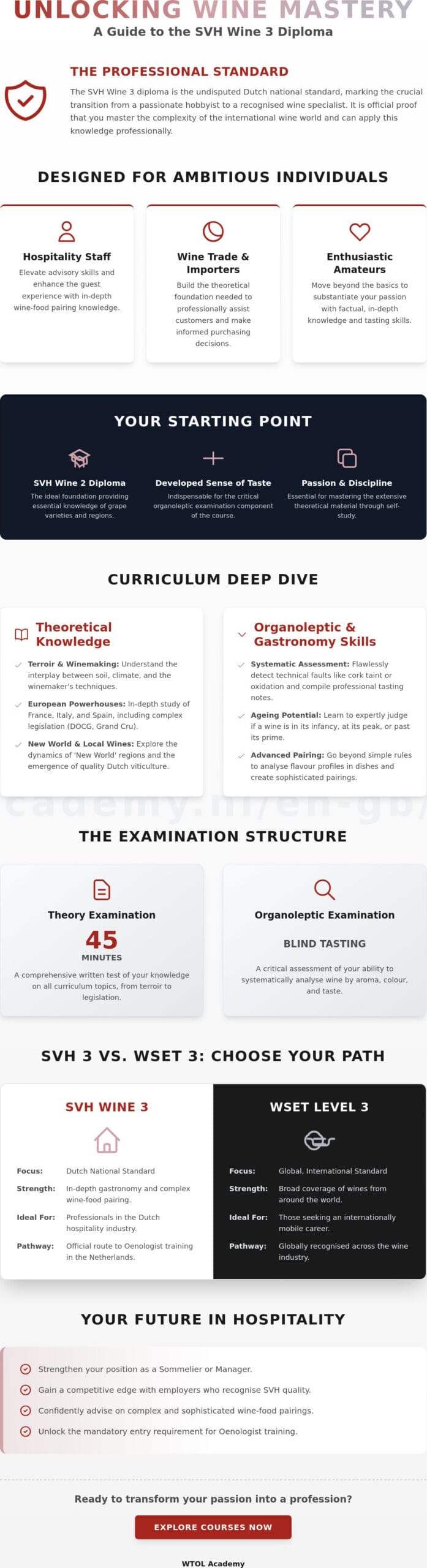
Key Points
- Discover why the SVH Wine 3 diploma is the national standard for transitioning from enthusiastic hobbyist to professional wine specialist.
- Learn how to build in-depth knowledge of terroir and winemaking techniques in the most important European wine regions.
- Make a strategic choice between SVH’s national focus and WSET’s global approach for your career.
- Get a clear overview of the examination requirements for both the theory and organoleptic components to prepare optimally.
- Understand how this wine diploma strengthens your position as a sommelier or manager and assists in advising on complex wine-food pairings.
Table of Contents
What is SVH Wine 3 and Why Do You Need This Diploma?
Those who take the step to SVH Wine 3 opt for a serious deepening of their craftsmanship. This diploma, often colloquially referred to as the Wine Diploma, is considered in the Netherlands as the undisputed national standard for advanced wine knowledge. It’s not just a certificate for the wall; it’s official proof that you master the complexity of the international wine world and can translate this knowledge into a professional working environment. Where previous levels often limit themselves to basic characteristics, this level compels you to look beyond just the label on the bottle.
Achieving this diploma marks the crucial transition from a passionate hobbyist to a recognised wine specialist. You learn not only what you taste precisely, but more importantly, why a wine has a specific character due to factors such as terroir and winemaking. For professionals in the Dutch hospitality industry, an SVH-recognised diploma offers tangible benefits. It significantly strengthens your position in the job market, as employers view this certification as a guarantee of quality and professional competence. Furthermore, the Wine Diploma is the mandatory admission requirement for anyone with the ambition to progress to the very highest level: training as an oenologist.
Who is the Wine Diploma For?
The training is specifically designed for ambitious hospitality staff who wish to elevate their advisory skills. It enables you to speak with greater depth and conviction about complex wine-food pairings, directly contributing to the guest experience. This level is also essential for employees in the wine trade or import sector; it provides the theoretical foundation needed to professionally assist customers. Additionally, we see a growing group of enthusiastic wine lovers who, after a basic course, feel the need to truly delve deeper and substantiate their passion with facts.
Admission Requirements and Desired Prior Knowledge
Whilst there is no strict legal obligation, the SVH Wine 2 diploma forms the ideal foundation for this training. The leap to SVH Wine 3 is substantial and requires a solid basic knowledge of grape varieties and regions. A well-developed sense of taste is indispensable, as the organoleptic examination is a critical component of the assessment. You must be able to systematically analyse and name nuances in aroma, colour, and taste. It is an intensive programme that requires a lot of self-study and tasting hours. Without a genuine passion for the subject, it is difficult to muster the necessary discipline for the extensive theoretical material. View the current range of courses to see which programme best suits your current level and ambitions.
The SVH Wine 3 Curriculum: In-depth Theory and Practice
The step to this level means leaving behind the basics of grape varieties and delving into the depth of terroir. In the official curriculum of SVH Wine 3, the focus is on the interplay between soil, climate, and the winemaker’s hand. You not only study the classic European powerhouses such as France, Italy, and Spain but also learn to understand the complex wine legislation and quality labels that protect these regions. Think of the strict requirements behind a DOCG or a Grand Cru classification.
Besides the traditions of the ‘Old World’, there is ample attention for the dynamics of the ‘New World’ and the surprising emergence of quality wines from our own country. Dutch viticulture has now become a serious part of the curriculum. You learn how modern winemaking techniques, such as cold fermentation or the use of different types of oak, influence the final style of the wine. This gives you the tools to technically interpret every bottle on the list and explain to guests why a specific wine possesses a certain flavour profile.
Organoleptic Tasting: The Art of Assessment
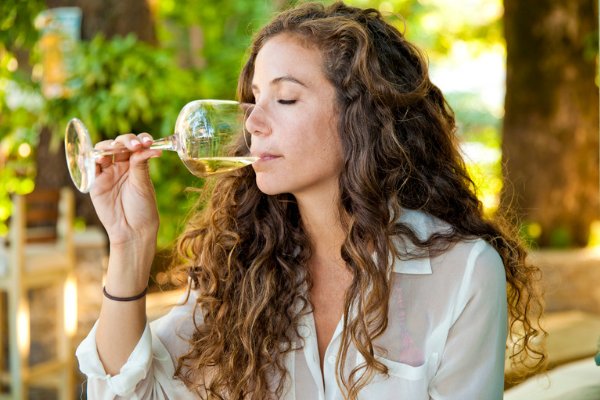
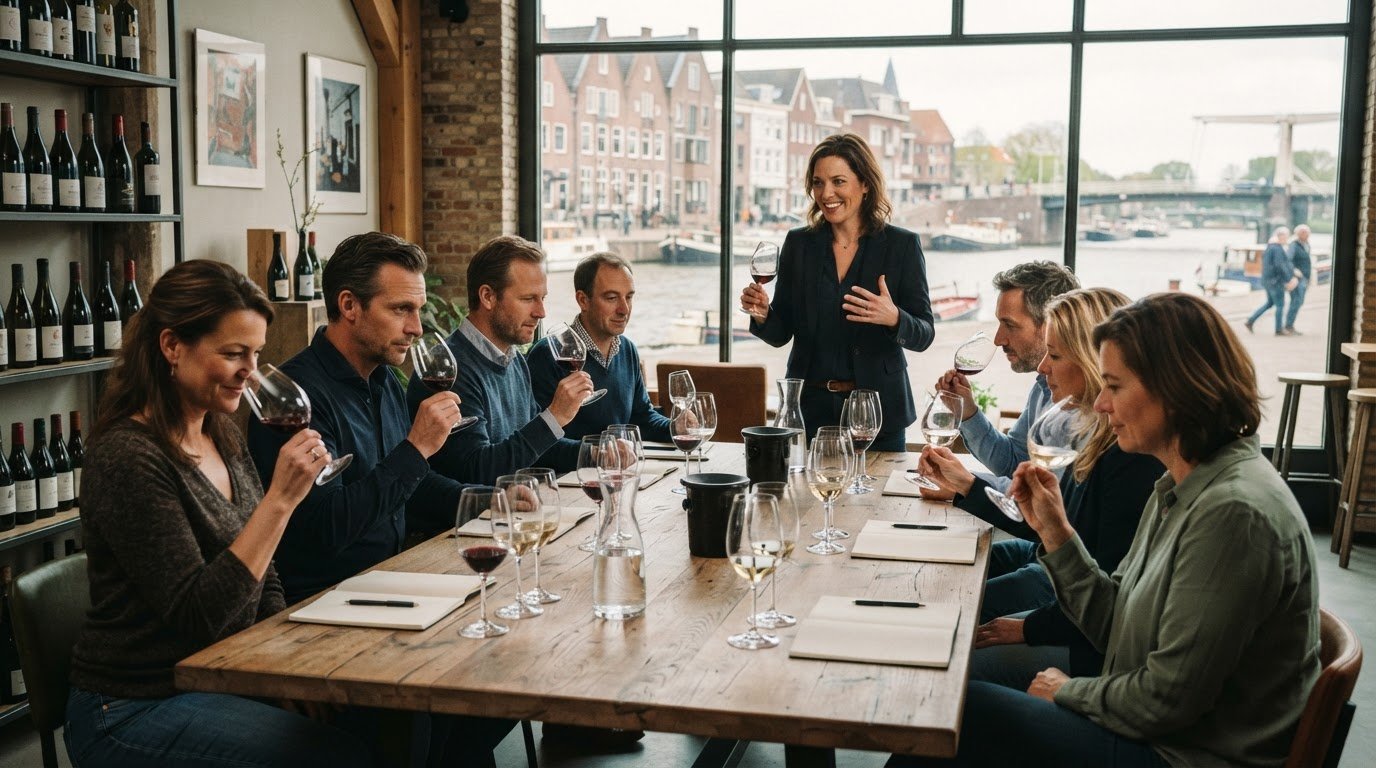
At level 3, tasting goes far beyond mere flavour recognition. You conduct a systematic organoleptic examination where you learn to flawlessly detect technical faults, such as cork taint or oxidation. A crucial component is assessing the ageing potential; you learn to judge whether a wine is still in its infancy or has reached its peak. According to the SVH method, you compile detailed tasting notes that serve as professional substantiation for your advice to guests or your purchasing policy.
Gastronomy and Creating Wine-Food Pairings
A unique aspect of this level is the deep dive into gastronomy. You learn to analyse flavour profiles in dishes based on basic tastes and mouthfeel. It’s no longer about simple rules like "white with fish", but about understanding flavour content and intensity. For example, you learn how the acidity in a wine can ‘cut through’ a fatty dish or how tannins react with proteins in meat to create a harmonious balance. These insights enable you to seamlessly align a wine list with a changing menu. Do you want to put these skills into practice? Then view the overview of our courses for a suitable start.
SVH Wine 3 versus WSET 3: Which Route Do You Choose?
The choice between SVH and another leading wine qualification is often the first major crossroads for an ambitious wine connoisseur. Whilst there are courses that offer a worldwide standard and are highly regarded, especially in import and trade, SVH Wine 3 focuses specifically on Dutch hospitality practice. The biggest difference lies in the approach to the material. SVH places a strong emphasis on European traditions and their direct application to guests at the table. With SVH Wine Courses, you learn to taste according to a method that seamlessly aligns with what Dutch sommeliers and restaurateurs expect of you.
The examination structure also differs significantly. Where some international courses use open questions that require deep theoretical analysis, SVH opts for a rigorous theory examination with 40 multiple-choice questions and a separate organoleptic component. This makes the SVH route extremely practical and results-oriented. For those with a busy schedule, WTOL Academy offers the ideal balance by combining e-learning with physical practical lessons. This way, you prepare at your own pace without missing out on essential tasting experience. You combine the convenience of studying at home with the necessary depth during the sessions.
The Value of an Internationally Recognised Certificate
So, when do you choose an internationally recognised wine diploma? This route is particularly interesting if you have ambitions to work beyond national borders or if you want to pursue a career with an international wine importer. The course material for such qualifications is often identical worldwide; this ensures a universal ‘wine language’ that is understood everywhere. Although the focus is less on specific Dutch gastronomy, an SVH diploma and an international certificate complement each other beautifully on a CV. It demonstrates that you understand both the local market and possess a broad, global perspective.
Why SVH Remains the Standard for Dutch Hospitality
In local hospitality, SVH often has an advantage. This is due to its close link with the Dutch Alcohol Act and the requirements surrounding social hygiene. An employer knows that a qualified individual at level 3 not only understands the contents of the bottle but also the legal frameworks associated with the responsible serving of alcohol. Furthermore, the course materials are fully available in Dutch; this lowers the barrier for many professionals. It ensures that you understand the complex subject matter of terroir and winemaking down to the smallest details and can directly apply it in the workplace of a Dutch restaurant.
The SVH Examination: Preparation for Theory and Tasting
The examination for SVH Wine 3 is the ultimate test of competence. This exciting component consists of two separate parts, both of which you must pass to receive the official diploma. The theory examination is an intensive 45-minute session in which you answer 40 multiple-choice questions. The bar is set high; you must answer at least 24 questions (60%) correctly to pass. The questions cover all world regions, from the steep slopes of the Mosel to the vast vineyards in Australia. During the organoleptic examination, you demonstrate that you can translate theory into practice by blindly analysing wines for grape variety, origin, and quality.
A successful examination day begins with the right mindset. Focus and calm are essential when you are presented with those first glasses. Trust your senses and the hours you have invested in training your palate. Prepare optimally for this challenge through one of our professional wine courses, where we guide you step-by-step to this level.
An Effective Study Plan for Self-Study Hours
The required 30+ hours of self-study for SVH Wine 3 sounds overwhelming, but with a structured plan, it is manageable. Divide your time wisely over the weeks leading up to the examination. Use the first two weeks to create visual summaries per wine region. Focus on the unique climatic conditions and the specific grape varieties that thrive there. In the third week, it is crucial to form tasting groups with fellow students. By tasting together and calibrating flavours, you develop an objective frame of reference that is indispensable during the blind examination. Use the final week to practise mock examinations to get used to the question format and time pressure.
Common Mistakes During the Tasting Examination
Many candidates stumble on the tasting component because they draw conclusions too quickly. People smell the glass and immediately think: "This is a Chardonnay." This often leads to ignoring objective characteristics that point to a different conclusion. Therefore, always use the Systematic Approach to Tasting (SAT) and complete it fully before making a final judgment. Additionally, the theory behind sparkling and fortified wines is often underestimated. The specific production methods of Champagne or Sherry are regular features on the examination. Finally, we often see that students do not sufficiently master the complex wine legislation per country. Knowing the difference between a French AOC and a Spanish DO is essential for your theoretical score.
Your Future in Hospitality After Achieving the Wine Diploma
Achieving your SVH Wine 3 is a milestone that accelerates your career. You are no longer just the person uncorking bottles; you are the expert who curates the wine list and monitors the profitability of beverage sales. As a sommelier or manager, this diploma gives you the authority to make informed decisions about purchasing and pricing. Employers in fine dining specifically seek professionals with this level, as they know that this expertise directly translates into higher guest satisfaction and a more professional image for the establishment.
The link between specialist knowledge and turnover is clear in practice. A guest who is unsure about a choice is happy to be guided by someone who can speak with passion and facts about terroir and winemaking. This built-up trust ensures that guests are more likely to choose a higher quality wine or an extensive package, which significantly increases the average spend per table. Moreover, SVH Wine 3 enables you to train your own team. You convey your enthusiasm to colleagues, which raises the overall service level and makes staff costs more profitable through better sales results.
At WTOL Academy, we see ourselves as your master-mentor in this process. We not only provide you with the necessary theory but also teach you how to apply this knowledge commercially and guest-focused. This diploma is also the indispensable key to training as an oenologist, the highest achievable level for wine professionals in the Netherlands. It marks the point where you stop learning about wine and start understanding the soul of the profession.
Combining Wine Knowledge with Hospitality
True mastery in hospitality means combining passion with responsibility. Advising a powerful red wine with a game dish is wonderful, but you must also master the frameworks of the Alcohol Act. Knowledge of social responisibility is therefore an indispensable addition to your wine diploma. It enables you to recognise signs of excessive consumption in good time and deal with them professionally. This way, you ensure a safe and hospitable environment, which is the foundation of any successful hospitality business. By uniting these two worlds, you become a complete host or hostess who understands both the content and the context of the profession.
Further Training at WTOL Academy
After achieving your wine diploma, the path to the top is wide open. Many of our students choose to further deepen their knowledge by specialising in specific regions through our 9-part advanced courses. These modules offer an excellent foundation for the step towards becoming an oenologist or sommelier, which is often seen as the ultimate culmination of your study path. At WTOL Academy, we are ready to support you at every stage of your development with up-to-date knowledge and personal guidance from practice. Are you ready for the next step in your career? Enrol today for one of WTOL Academy’s courses and invest in your own professional growth.
Take the Next Step in Your Wine Career
Achieving the official wine diploma is more than a personal accomplishment; it is the foundation for your further growth as a wine specialist. You have discovered how this programme bridges basic knowledge and the depth required for advising on complex wine-food pairings. With the SVH Wine 3 diploma in hand, you not only enhance your own professional competence but also increase commercial opportunities within hospitality and access to the prestigious oenologist training.
WTOL Academy, as an officially SVH-accredited training institute, guides you through every step of this process. With our national coverage and the choice between physical or online lessons, we offer a flexible learning environment that seamlessly fits your professional schedule. Our strong focus on practical tasting guarantees that you can directly translate theory into tangible results and an enhanced guest experience in the workplace.
**View the start dates for SVH Wine 3 at WTOL Academy ** and start professionalising your passion today. We look forward to exploring the fascinating depth of the wine profession with you.
Frequently Asked Questions About the Wine Diploma
Is SVH Wine 3 a difficult examination to pass?
The examination is considered challenging by many candidates because it requires a combination of in-depth theory and sharp tasting skills. The bar is set considerably higher than at entry levels; you must answer at least 60% of the theory questions correctly to pass. Thorough preparation and sufficient tasting practice are essential to demonstrate this level of professional competence. With the right effort, however, SVH Wine 3 is a very achievable and valuable goal for any ambitious connoisseur.
What is the difference between SVH Wine 3 and the Wine Diploma?
There is no substantive difference; SVH Wine 3 is simply the official, modern name for what is still often colloquially referred to as the wine diploma. Where in the past people spoke of obtaining your diploma, the Foundation for Professional Competence in Hospitality (Stichting Vakbekwaamheid Horeca) now uses this standardised designation. The diploma you receive is identical and enjoys the highest national recognition within Dutch gastronomy and the wine trade.
How many study hours do I really need in addition to the lessons?
On average, expect 30 to 40 hours of self-study to fully master the extensive material. You need this time for studying the various international wine regions, making summaries, and practising with mock examinations. It is advisable to spread these hours over the entire course period and regularly meet with a tasting group to calibrate your flavour profiles with fellow students.
Can I take SVH Wine 3 directly without SVH Wine 2?
It is legally permitted to enrol directly at this level, but we only recommend this if you already possess a solid amount of basic knowledge. The leap to the wine diploma is significant, and the theory immediately delves into depth. SVH Wine 2 lays the necessary foundation of grape varieties and basic styles that you need to understand the complex concepts of terroir and winemaking at level 3.
What exactly does the SVH organoleptic examination entail?
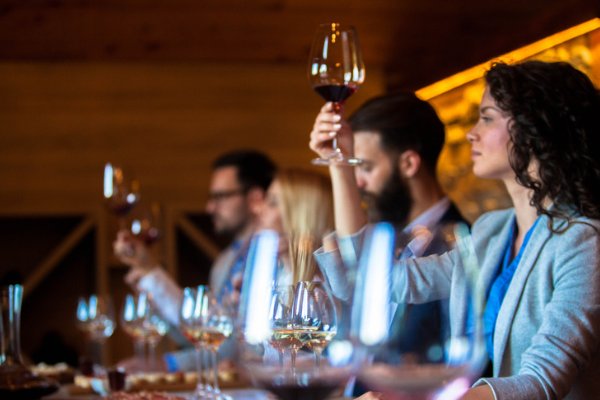
This is a blind tasting examination where you systematically analyse various wines based on colour, aroma, and flavour profile. You must be able to draw objective conclusions about the grape variety, origin, and quality of the wine. During this component, you also learn to recognise technical faults and make a substantiated statement about the ageing potential. The goal is to demonstrate that you can technically dissect a wine without seeing the label.
Is the SVH Wine 3 diploma valid indefinitely?
Yes, the SVH Wine 3 diploma obtained is valid indefinitely and does not need to be renewed in the future. It is a lifelong proof of your expertise at this level. Of course, the wine world never stands still; therefore, it is essential for professionals to actively continue tasting and stay informed about new trends, regions, and vintages to keep their knowledge current.
What are the costs for the SVH Wine 3 course in 2026?
The total investment for the course varies per provider and depends on the chosen learning format, such as a fully physical programme or a combined programme with e-learning. For the most current rates and available start dates, it is best to consult our full overview. Please note that the examination fees for theory and practical components are sometimes charged separately by the examination body.
Can I also take the SVH Wine 3 course online?
Yes, many students opt for a hybrid format where the theory via e-learning is followed and the practical lessons take place physically. The theoretical material on regions and legislation lends itself perfectly to online self-study at your own pace. For the organoleptic part, however, we always advise participating in physical tasting sessions. Training your senses under the guidance of an experienced lecturer is crucial for passing the practical examination.