

A Burgundy master is about much more than simply memorising appellations. During the six-day immersion in Beaune, you will attend 18 hours of classroom teaching and taste more than 40 exceptional Burgundy wines under expert guidance. Preparation includes approximately 15 hours of online lectures and recorded videos.
That suits the sheer richness of Burgundy: the names of villages, vineyards and crus each tell part of the story. Soil, aspect and climate give every single site its own distinct character. The region’s long viticultural history helps you recognise and articulate these subtle differences.
In this article, you will discover which appellations and crus define Burgundy, and how history and terroir intertwine. You will also learn how the immersion in Beaune is structured, what you study beforehand, and how classroom lessons, mapping assignments and tastings deepen your understanding.
Key points
- Learn how appellations, village names, and the premier cru and grand cru designations help you make sense of the Burgundian wine regions.
- Discover how history, geology and aspect come together to shape the character of Burgundian terroirs.
- Gain insight into the structure of the immersion in Beaune and the role of preparation, tuition, cartographic knowledge and tasting.
- See how qualifications in beer, spirits and hospitality can further broaden your beverage and hospitality expertise.
Appellations, premiers crus and grands crus
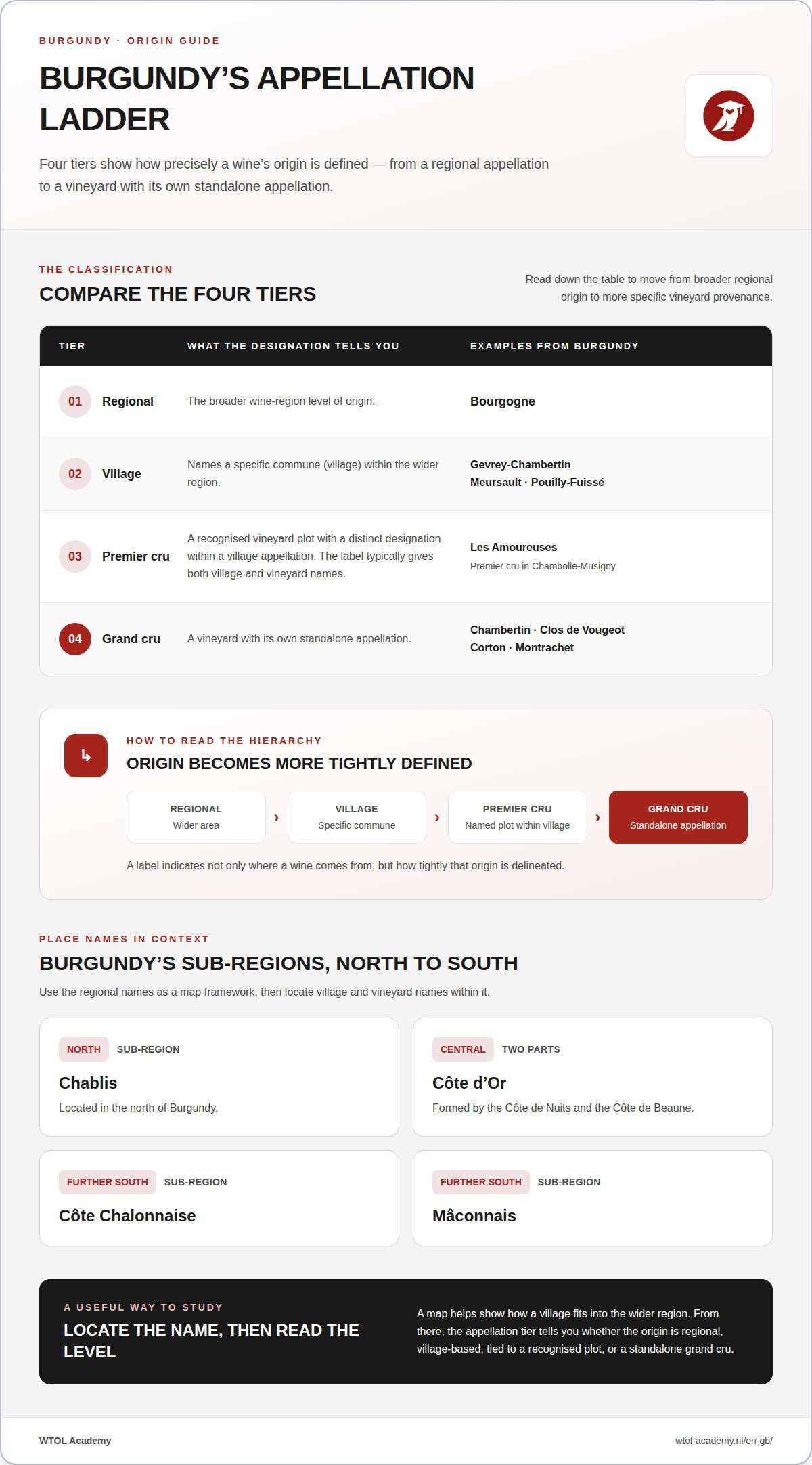
Burgundy’s appellations form a classification of origin structured into several tiers. You will find regional appellations, such as Bourgogne, as well as appellations for specific villages and individual vineyards. The designations premier cru and grand cru refer to vineyards with their own official appellation status within this framework. The name on the label therefore indicates not just where the wine comes from, but precisely how tightly that origin is delineated.
Start with the broader sub-regions. Chablis lies in the north; the Côte de Nuits and Côte de Beaune together form the Côte d’Or. Further south lie the Côte Chalonnaise and the Mâconnais. Names such as Gevrey-Chambertin, Meursault and Pouilly-Fuissé refer to specific communal (village) appellations. Using a map allows you to locate these names and see how an individual village fits into the wider wine region.
A premier cru comes from a recognised vineyard plot with a distinct designation of origin within a village appellation. Les Amoureuses, for instance, is a premier cru in Chambolle-Musigny. The label will typically feature both the village name and the vineyard name. In this way, the provenance is more specific than a village appellation alone, whilst remaining firmly linked to the village itself.
A grand cru enjoys its own standalone appellation. Examples include Chambertin and Clos de Vougeot in the Côte de Nuits, and Corton and Montrachet in the Côte de Beaune. You should therefore learn the tiers in hierarchical order: regional, village, premier cru and grand cru. A structured programme can bring this classification to life through concrete bottle labels. For wine businesses looking to deepen their regional trade connections, information on regional collaboration offers a valuable starting point.
Burgundian history, geology and terroirs
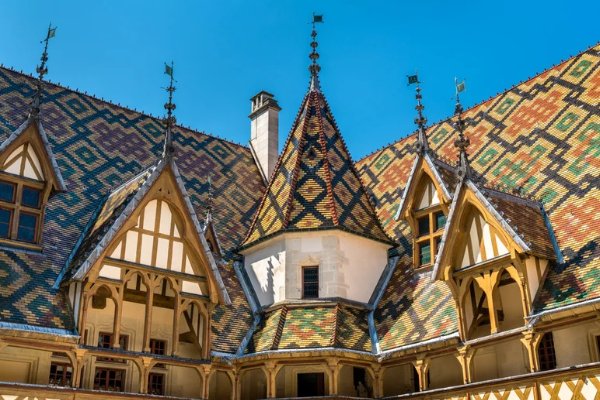
Burgundian viticulture evolved over the centuries around monastic orders, land ownership and meticulously demarcated vineyards. Cluny Abbey played an instrumental role in the religious and cultural life of the area. Cistercian monks also developed an exhaustive understanding of vineyards and their differences. This history helps explain why origin is delineated with such precision here. A parcel of vines is not merely a coordinate on a map; it forms part of a living tradition linking soil and wine.
The underlying geology makes these differences tangible. In Burgundy, limestone, marl and clay sit side by side. Limestone-rich soils drain water very differently from clay-heavy strata. This directly influences the growing conditions of the vines, as do elevation, aspect and shelter from prevailing winds. In Chablis, limestone and Kimmeridgian marl play a defining role; further south, soil composition and exposition vary from one vineyard to the next. You should therefore look beyond the village name and consider the exact plot and bedrock where the grapes are grown.
Terroir encompasses far more than geology alone. The intricate interplay of soil, climate, topography and human choices gives each wine its sense of place. For example, a well-drained slope behaves quite differently from lower-lying ground where moisture lingers. The orientation of a parcel also dictates how much sun the grapes receive throughout the day. Every single vineyard thus acquires its own profile, without any single soil component telling the entire story.
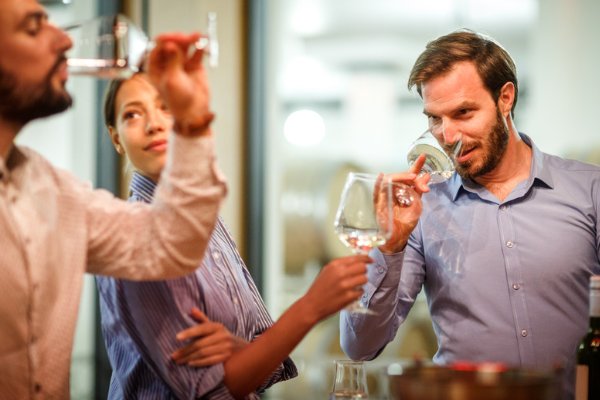
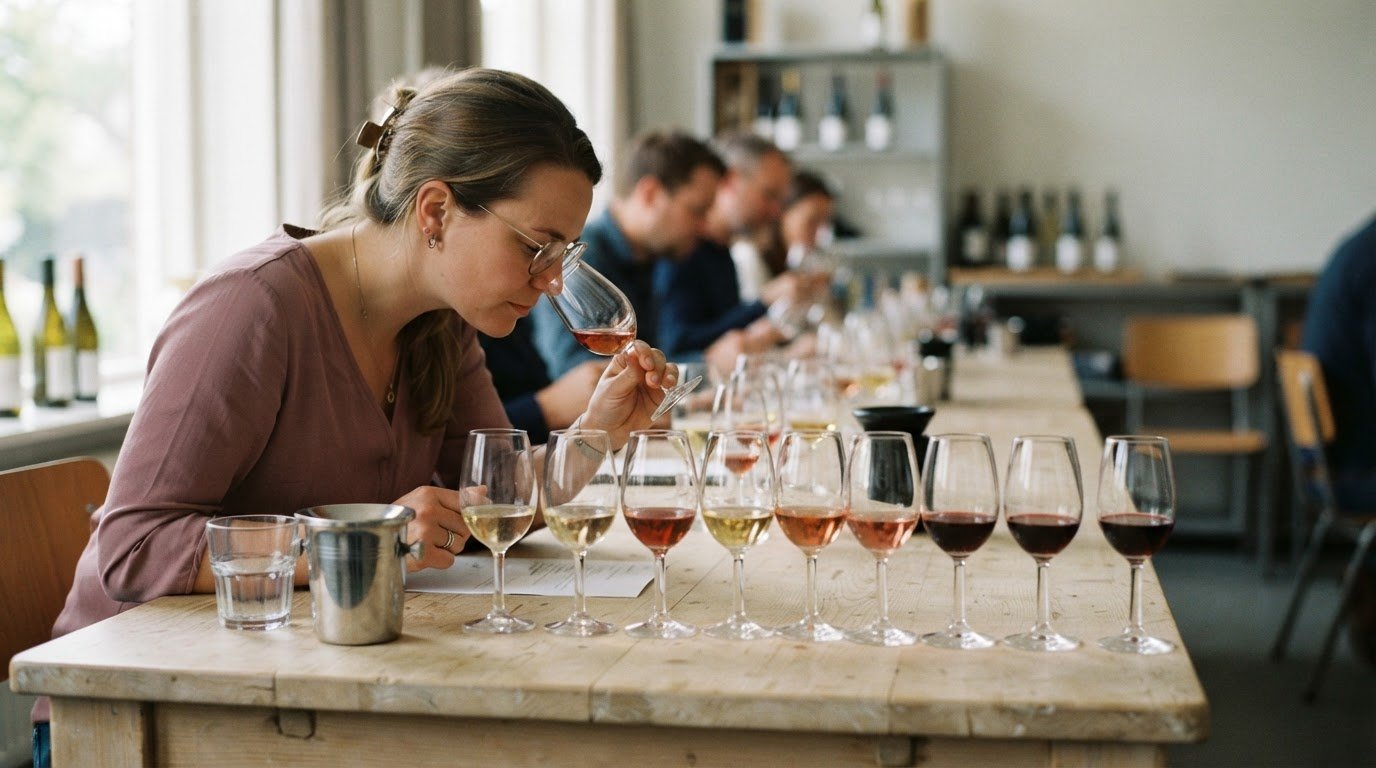
If you want to read terroir with greater precision, compare wines step by step: begin with provenance, examine the soil and aspect, and then taste the impact of that combination in the glass. This approach unlocks a unique tapestry of topographical and historical connections. Further developing your specialist knowledge can be achieved through dedicated wine courses and education.
Structure and content of the Burgundy Master immersion
The Burgundy Master immersion brings together online preparation with classroom study and guided tastings in Beaune. The programme spans six days and includes 18 hours of direct tuition. In addition, you will complete roughly 15 hours of online lectures and recorded video modules. The six months of preparatory online study must be completed before embarking on the study trip.
What sets this apart from general master programmes in the Netherlands is its sharp, specialist focus: the entire curriculum centres on Burgundy, from advanced cartography to sensory analysis. In Beaune, technical lectures and tutored masterclasses help you connect geographical origin directly with wine style. You will taste more than 40 exceptional Burgundies along the way.
The preparatory coursework is mandatory: complete all online modules before travelling to the region. The course guidelines do not state any additional formal entry criteria. The final examination assesses your knowledge through 50 multiple-choice questions, four short essay questions and a mapping exercise where you must accurately identify ten geographical features of Burgundy. You need to achieve at least 75 out of 100 points to pass.
Exam registration opens from July 2027. Use this date as the benchmark for your study schedule and ensure you finish your online coursework well in advance. Bear in mind that an international course format does not automatically confer formal higher education status: a specialist certificate is not equivalent to an accredited Dutch master’s degree or statutory qualification. Always assess recognition based on the formal standing awarded by the issuing body.
No formal scholarship or government student finance scheme is offered for this immersion in the published course information. Funding options depend on your employer’s professional development budget or personal finances. You should not treat this as guaranteed financial support.
If you want to continue advancing your wine expertise, explore the wine education and study options that best match your learning ambitions.
The classroom phase in Beaune runs across 6 days. Participants are expected to complete the six months of online study ahead of the study tour, ensuring that thorough preparation precedes your time on location. The four short essay questions of the Burgundy Master examination carry 40 points in total, forming a clearly defined and substantial element of the assessment.
WTOL Academy
WTOL Academy helps you deepen your professional expertise through courses and e-learning programmes covering beverages and hospitality service. Whilst the Burgundy immersion focuses exclusively on Burgundy, complementary training can strengthen your broader hospitality credentials.
Would you like to build your understanding of other drinks alongside wine? The Wine, Beer and Spirits e-learning programme offers the flexibility to study independently at your own pace. For further specialisation, there are also dedicated modules on spirits and front-of-house hospitality. Courses covering social hygiene (food and alcohol safety) are equally valuable if you want to reinforce your knowledge of responsible service in hospitality as part of your journey towards becoming a Burgundy master.
Choose a learning pathway that aligns with your career and professional development goals. Step by step, you will acquire practical industry knowledge that you can immediately apply in the workplace. Get in touch with WTOL Academy to discuss your training requirements.
Take your next step in wine knowledge
Eager to progress towards the level of a Burgundy master? Choose a next step in your training that matches your current experience and professional ambitions. A solid grounding in wine theory will help you speak about wine with greater confidence and provide a strong foundation for advanced study.
WTOL Academy offers SVH Wine 1, SVH Wine 2 and SVH Wine 3 (Wijnbrevet). This allows you to select a qualification tailored to your specific learning goals. Start by considering which skills you want to develop and how you intend to apply them in practice. That will guide your choice, without limiting your growth to just one wine region.
Wondering which wine course is the right fit for your next step? Contact WTOL Academy to talk through your ambitions. With clear goals in place, you can build your industry expertise with complete confidence.