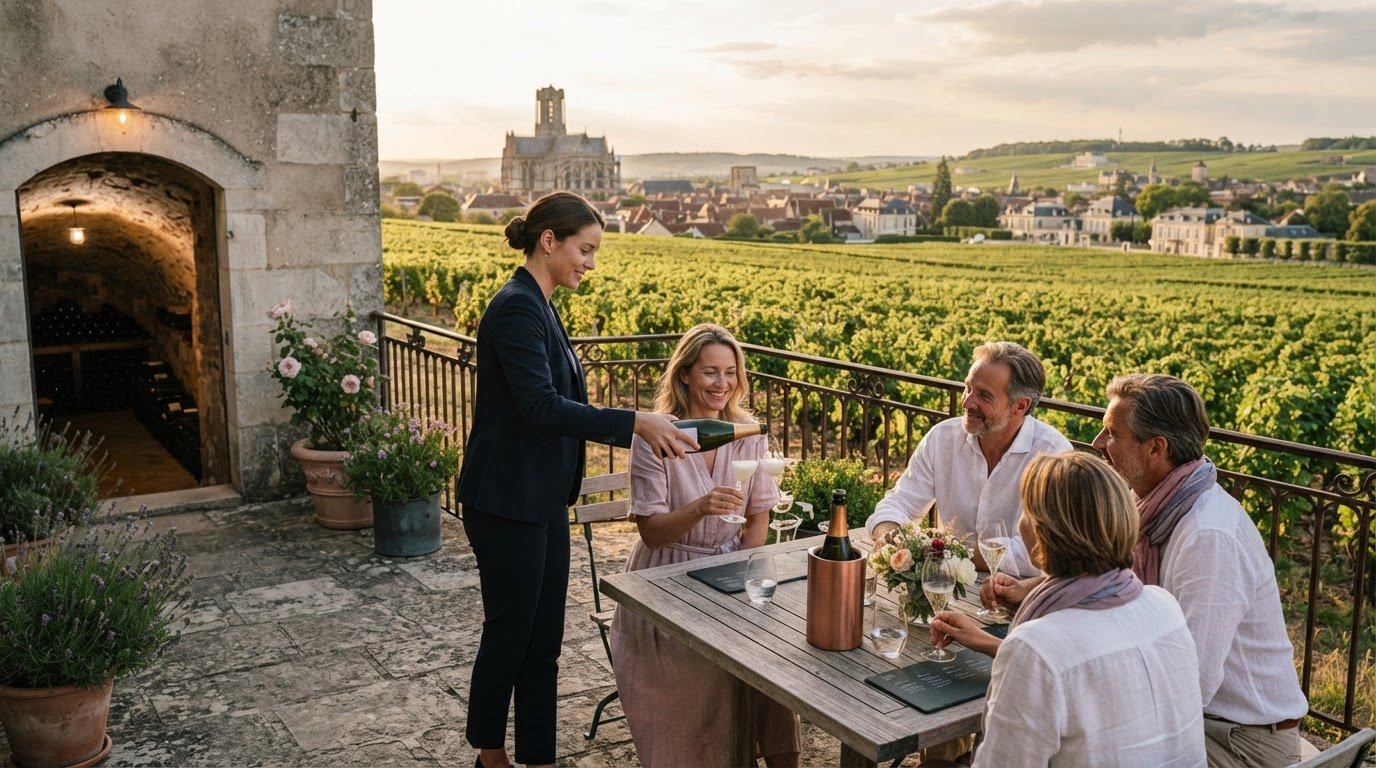

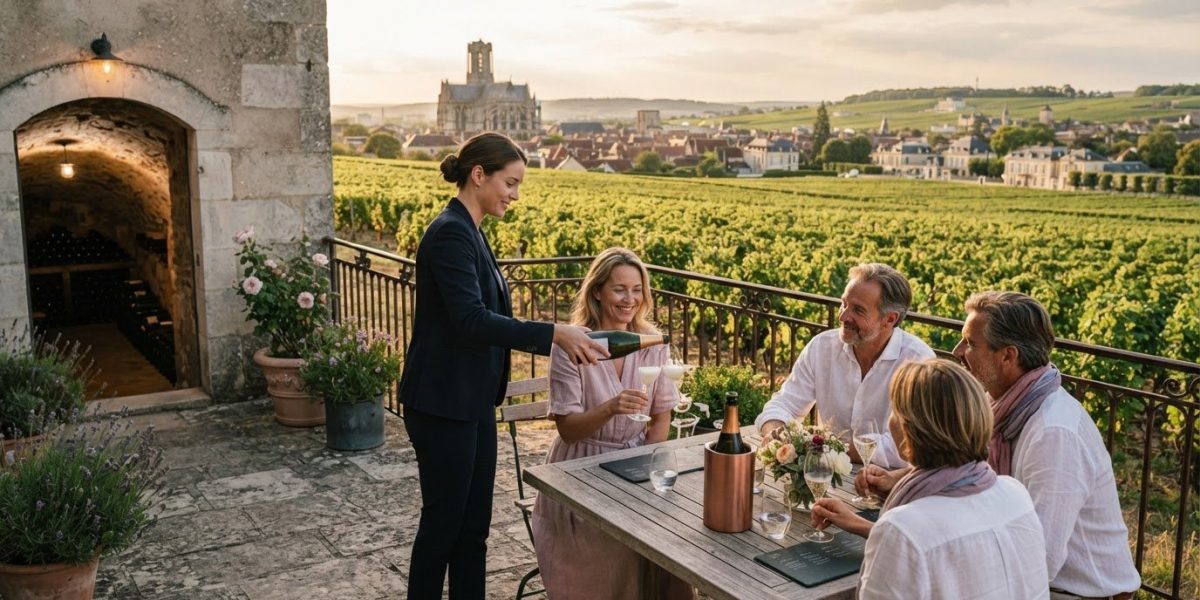
A wine tour to Champagne takes you not only to Reims and Épernay, but also across four wine-growing regions, each with its own distinct character. Which visits, overnight stays, transport, and tastings are included depends on the programme. It is therefore worth comparing itinerary descriptions to see what the tour price covers. Find out more about the wine tour
Perhaps you can already picture yourself descending into a champagne cellar or tasting a glass amongst the vineyards. Naturally, the way the trip is structured determines how much room there is for famous towns, champagne houses, and the surrounding countryside. After reading this, you will know which places you can visit and which elements to look out for in the tour itinerary.
We will look at what a tour around Reims and Épernay can include. You will also discover which champagne houses and wine regions make the area so special, helping you choose a trip that matches your interest in Champagne.
Key Takeaways
- Compare per trip which elements are included in the price, such as accommodation, transport, and tastings.
- Discover how Reims and the Avenue de Champagne in Épernay each offer a distinct perspective on the region.
- Learn what to look out for when visiting champagne houses, from the cellar experience to the producer’s style.
- Recognise the differences between the four wine-growing regions and use them to tailor your itinerary to your interests.
Reims and the Avenue de Champagne in Épernay
Together, Reims and Épernay make an excellent base for a visit to Champagne. In Reims, you can view the Notre-Dame Cathedral, which according to the available travel information is 800 years old. In Épernay, the famous Avenue de Champagne runs past grand champagne houses and cellars. Beneath the avenue lie vast cellars where champagne is stored. This allows you to discover the region’s history and landscape alongside its sparkling wine.
The best time to visit depends on what you want to experience. Choose a season to explore vineyards and villages, or plan your trip around an event such as Habits de Lumière in Épernay, which takes place in December. The time of year also determines how you experience the vines and vineyards along your route.
From Utrecht, Reims is about a 400-kilometre drive, taking roughly 4 hours and 15 minutes. Épernay is around 430 kilometres away and takes about 4.5 hours. A route through the villages around Épernay can include Hautvillers, which is just a short cycle ride away. Bouzy and Aÿ are also renowned names to feature in your itinerary.
You can drive to Champagne yourself and travel between Reims, Épernay, and the wine villages. Getting behind the wheel after a champagne tasting is risky, however, as alcohol impairs your driving ability. It is best, therefore, to arrange transport where you do not need to drive yourself, such as having a designated driver or using local transport.
In Épernay, you can stay in the featured three-star hotel. Restaurants such as Le Bateau Lavoir in Damery and Château de Sacy near Reims offer fantastic dining options outside the town centre. For visits on Mondays and Tuesdays, local transport is arranged. This allows you to plan your route around champagne houses and sights without having to drive yourself after a tasting.
Which Champagne Houses to Visit?
Combine a visit to a major champagne house with a stop at an independent producer. That way, you can compare cellar tours, working methods, and champagnes from different villages.
Large and Small Champagne Houses
At a large house such as Mercier, the visit often centres around impressive cellars and an organised tasting. Mercier’s cellars span 18 kilometres; a lift takes visitors 30 metres underground. When choosing, consider the tour itinerary and the champagnes you will be tasting. Moët & Chandon is another household name, producing around 28 million bottles a year. Such visits demonstrate how scale and presentation come together.
Visiting Independent Producers
Smaller producers often introduce you directly to their own vineyards and winemaking choices in the cellar. In Aÿ, the Gatinois family has been producing wine since the early 18th century. The estate spans 7 hectares of vineyards, with pinot noir making up around 90% of plantings. In Mancy, the story of Pernet-Lebrun began in 1850. At Charlier et fils, approximately 17 kilometres from Épernay, all champagne is aged in oak casks. Compare the grape varieties, ageing, and style of their wines.
Which houses can you visit? Consider Mercier, Moët & Chandon, Gatinois, Pernet-Lebrun, and Charlier et fils. Book guided tours and tastings in advance directly with your chosen house. Guided tours at champagne producers are conducted in English. Follow the house’s guidance during your visit so the tour and tasting run smoothly together.
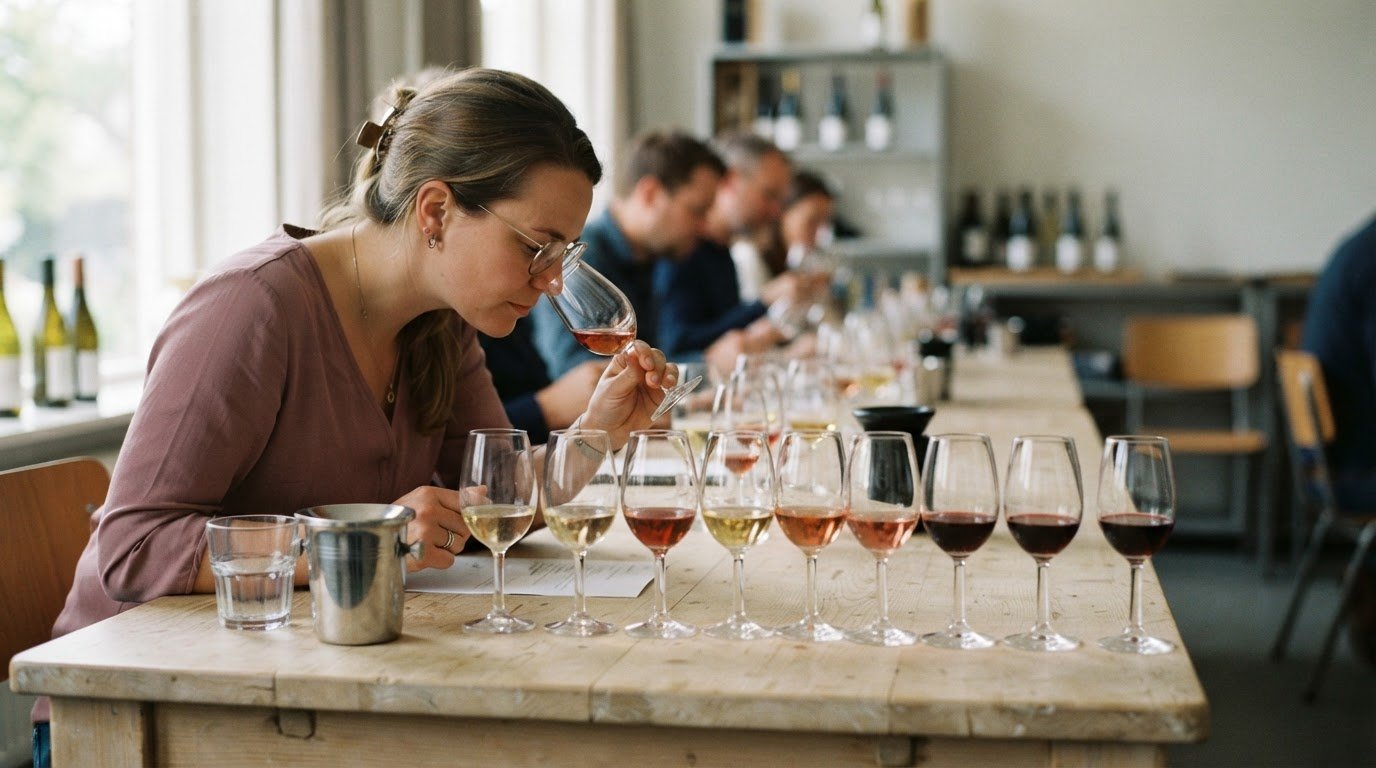
Would you like to deepen your knowledge of grape varieties and wine styles? Then take a look at the wine courses.
For special events or large group bookings, the tour operator advises submitting an enquiry 6 to 12 months prior to departure, allowing ample time for coordination.
The Four Wine Regions of Champagne
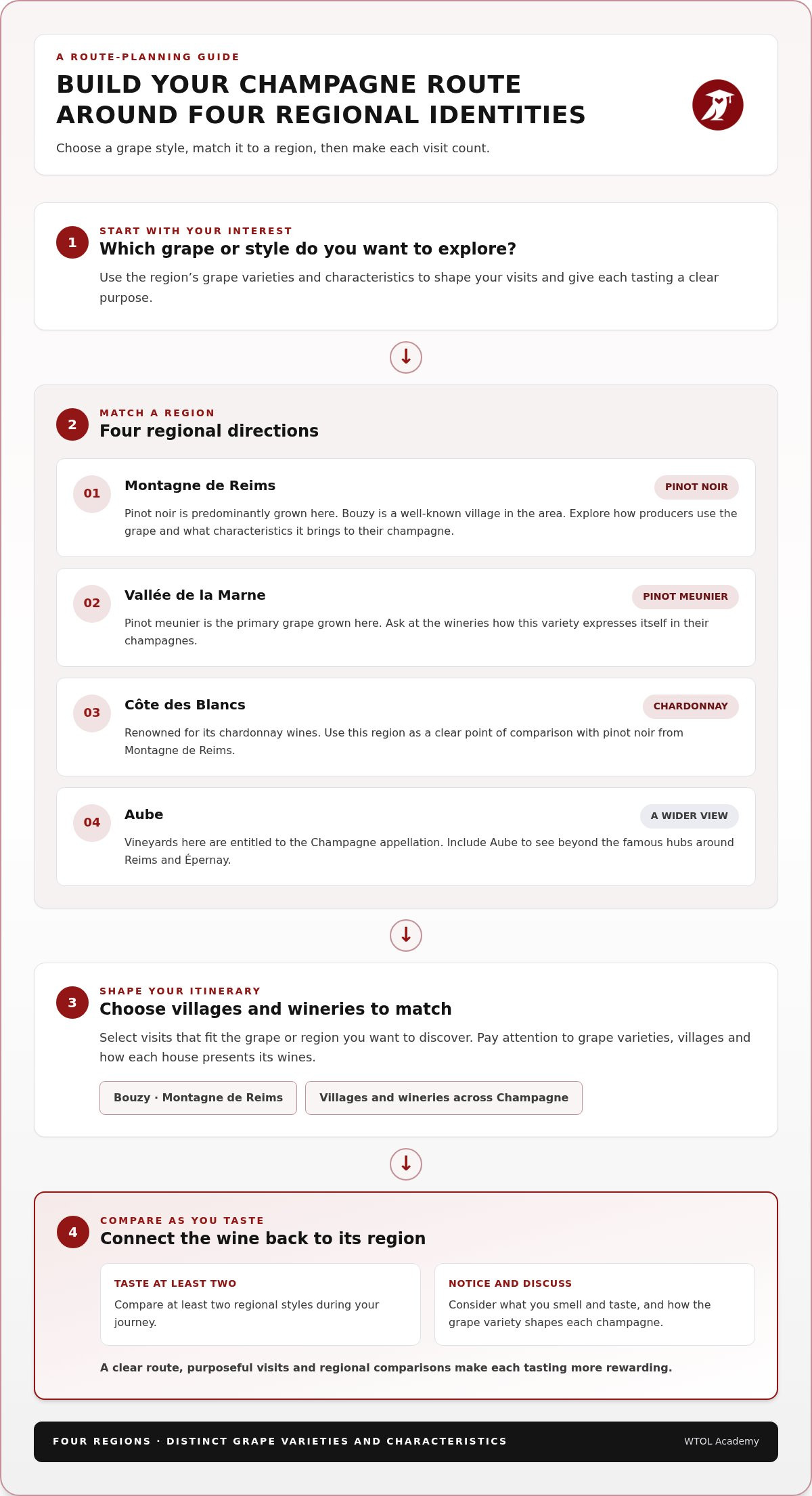
Champagne consists of four wine-growing regions, each with distinct grape varieties or characteristics. This division helps you choose your visits and compare tastings in a structured way. Pay attention along the way to the grape varieties, the villages, and the manner in which houses present their wines. This will show you how the different parts of Champagne form one unified world of wine.
- Montagne de Reims: pinot noir is predominantly grown here. Bouzy is a well-known village in this area. Choose this region if you want to discover how producers utilise pinot noir during visits. Compare the wines during a tasting and ask what characteristics the grape imparts to the champagne.
- Vallée de la Marne: pinot meunier is the primary grape grown here. Include this region when you want to see how a grape variety other than pinot noir is used. At the wineries, you can ask how this grape expresses itself in their champagnes.
- Côte des Blancs: this area is renowned for its chardonnay wines. A visit provides a clear point of comparison with the pinot noir from Montagne de Reims. Taste both styles side by side and note the differences you recognise yourself.
- Aube: vineyards in the Aube are entitled to the Champagne appellation. Include this region in your picture of the production area to see that Champagne consists of more than just the famous hubs around Reims and Épernay.
Use the four regions as your route compass: first choose a grape variety, then determine which villages and wineries match it. That way, each visit has a clear purpose, and tasting becomes far more rewarding when connected directly to the vineyard. Compare at least two regional styles during your journey and discuss what you smell and taste.
Would you like to learn more about recognising the differences between grapes and wine styles? Then explore the wine courses.
WTOL Academy: SVH Wine 1
WTOL Academy offers Wine 3 (Wine Certificate) for anyone wanting to deepen their wine knowledge further after visiting Champagne. A tasting can spark questions about grape varieties, wine styles, and winemaking decisions. With a structured wine education, you can turn that curiosity into genuine insight.
Wine 3 (Wine Certificate) is ideal if you want to advance your understanding of wine and apply that knowledge in your profession. The champagne tour lets you experience various houses, regions, and styles on the ground; a course provides the natural next step to develop your wine knowledge even further.
Explore the options at WTOL Academy or get in touch if you would like to know more.
Deepen Your Wine Knowledge After Your Trip
A visit to Champagne can be the beginning of a broader journey of discovery. Use what you have tasted as a springboard to explore grapes, wine styles, and tasting skills in greater depth. With a wine course from WTOL Academy, you can develop that passion further and apply your knowledge at dinner or in your professional life.
WTOL Academy offers SVH Wine 1, SVH Wine 2, and SVH Wine 3 (Wine Certificate). Which level suits you depends on what you already know and where you wish to develop further. Even after a wine tour to Champagne, you can continue learning in a focused way.
Check out the courses at WTOL Academy and discover which path best matches your interests. Every new tasting experience gives you something fresh to build upon.
Frequently Asked Questions
What is included in the tour and the price?
Which components are included depends on the travel programme. It is therefore advisable to compare which accommodation, local transport, producer visits, and tastings are featured. Also pay attention to scheduling: on the tour described, transport is arranged for visits on Mondays and Tuesdays, and guided tours at champagne houses are in English. This ensures you know exactly what the tour price covers.
What is a Champagne wine tour, and which places are popular?
A wine tour to Champagne combines visits to wineries and vineyards with tastings and time to explore the region. Reims and Épernay are popular starting points, while Hautvillers and Aÿ offer a glimpse into smaller villages. Make your itinerary manageable by focusing on one key visit per day and leaving plenty of time for travel and meals.
What is the difference between visiting major champagne houses and independent winegrowers?
At a major champagne house, the focus is often on an organised visitor experience, whereas visiting an independent winegrower often offers deeper insight into a single producer’s personal story. Compare the tour, the champagnes tasted, and the explanation of winemaking methods beforehand. That way, you can choose visits that complement one another.