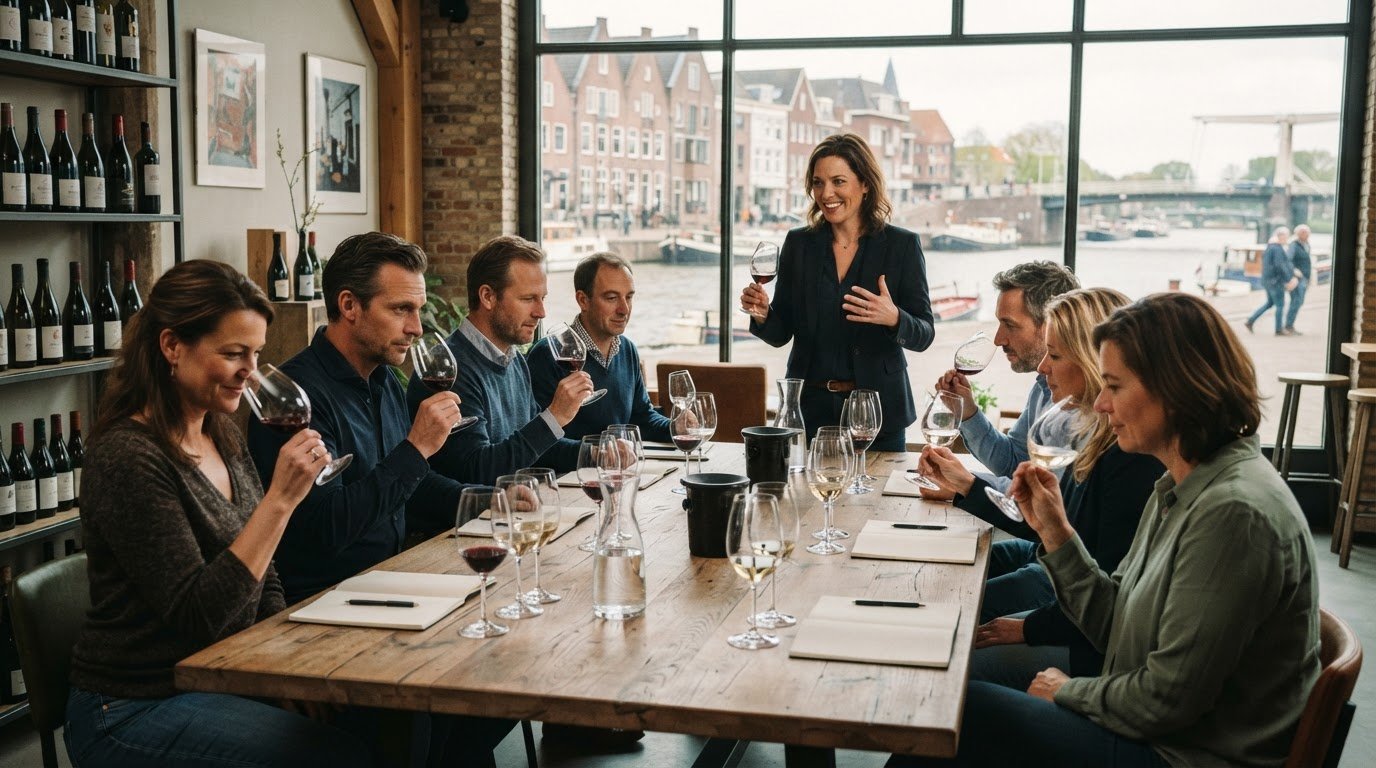



The right choice of drink doesn’t start with the menu, but with knowing what you are serving. Drinks knowledge in hospitality helps you manage drinks carefully, give guests tailored recommendations, and select food-and-drink pairings that complement each other. According to the Dutch government, you must not serve alcohol to anyone who is visibly intoxicated.
You probably already know that good advice enhances the guest experience. Even so, the profession requires more than simply recommending a wine or beer: you need to recognise flavours, gauge preferences, and find alternatives that suit both the dish and the moment.
In this article, you will learn how drinks knowledge helps you manage your product range, interact with guests, and put together fitting pairings. You will also discover which knowledge of wine, beer, and spirits is useful in hospitality and how to develop it further.
Key takeaways
- Manage your drinks range mindfully: pay close attention to quality upon receipt and during storage, so you can offer guests suitable drinks.
- Tailor your recommendations to your guest’s taste preferences, the dish, and the stage of the meal.
- Learn to evaluate drinks by appearance, aroma, and flavour to recognise and explain differences more effectively.
- Looking to deepen your beer knowledge for your hospitality role? With SVH Beer 1 & 2 from WTOL Academy, you can take purposeful steps.
Receiving, storing, and selling alcoholic drinks
Careful drinks management starts at reception. Check the delivery, product name, and the condition of the packaging. Store bottles according to the producer’s instructions, and make sure stock and drinks menus are well aligned.
Make a note of the origin, raw ingredients, and production method for each drink. Grape varieties and vinification, for example, help you explain a wine, whilst malt, hops, and fermentation provide insight into beer. With spirits, the raw ingredients and distillation method help define their character. Armed with that knowledge, you will understand your range better and be able to answer guests’ questions with ease.
Categorisation by alcohol percentage
Distinguish clearly on the menu between alcoholic drinks and alcohol-free options. Use the alcohol percentage on the label to classify products accurately, and state the category clearly. Alongside wine, beer, and spirits, consider water, tea, infusions, and alcohol-free mixed drinks. This makes it much easier for guests to choose based on flavour and their desired alcohol intake.
Selling alcohol comes with responsible service. According to the Dutch government, you must not serve alcohol to anyone who is visibly intoxicated. Establish clear agreements with staff on how to spot this and how to refuse an order calmly.
Drinks pricing, margins, and portion sizes
How do you calculate drinks prices, margins, and portion sizes in hospitality? First, calculate the cost price per serving based on the purchase price and the volume in the glass. Then incorporate wastage, other operating overheads, and your desired profit margin into the selling price. Set standard portion sizes so team members pour consistently, allowing you to reconcile stock against sales more effectively.
An alcohol-free pairing flight requires variety, not just juice. Fruit juices and heavily sweetened mocktails can feel heavy; light infusions offer a completely different mouthfeel. Water kefir, kombucha, or a fresh ginger mocktail work brilliantly as an opening drink for a meal. A distinctive tonic paired with non-alcoholic gin or another botanical distillate also makes for a fragrant start. Tailor the choice to the dish and flavour intensity. Explore the drinks knowledge courses to develop your professional expertise further.
Advising guests on drinks and food pairings
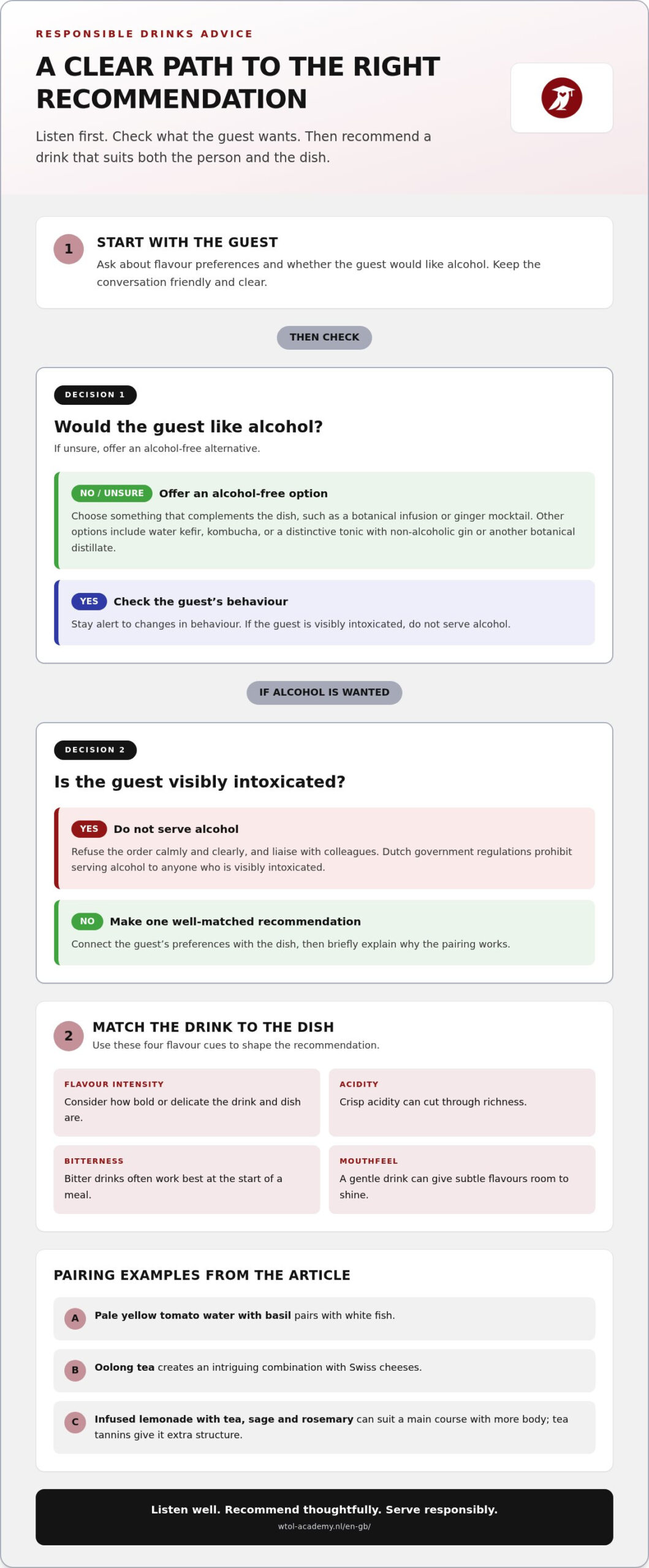
Good advice connects the flavour profile of the drink with the dish and your guest’s preferences. Ask what they enjoy drinking, and then explain a single well-matched pairing.
Recommending food-and-drink pairings
When pairing, pay attention to flavour intensity, acidity, bitterness, and mouthfeel. Pale yellow tomato water infused with basil, for instance, pairs beautifully with white fish. Oolong tea creates an intriguing combination with Swiss cheeses. For a main course with more body, an infused lemonade featuring tea, sage, and rosemary can be an ideal match. The tannins from the tea give the lemonade extra structure.
Briefly explain why you are suggesting a particular pairing. Explain, for example, how crisp acidity cuts through richness or how a gentle drink gives subtle flavours room to shine. Bitter drinks, on the other hand, often work best at the start of a meal. For a full pairing package, the chef and mixologist can collaborate to tailor drinks to consecutive courses.
Providing responsible drinks advice
Responsible recommendations start with listening: enquire about flavour preferences and whether the guest would like alcohol. If in doubt, offer an alcohol-free alternative, such as a botanical infusion or ginger mocktail. Do not push for another round of alcoholic drinks. Watch for changes in behaviour and liaise with colleagues if a guest becomes visibly intoxicated. Under Dutch government regulations, you are not permitted to serve alcohol to that guest.
Keep the conversation friendly and clear. You could, for instance, explain which non-alcoholic drink complements their chosen dish, ensuring the guest can continue enjoying the experience comfortably. If you would like to deepen your understanding of non-alcoholic pairings, check out the drinks courses.
Knowledge of spirits, cocktails, liqueurs, and mixed drinks
Drinks knowledge revolves around identifying, assessing, and explaining clearly. This allows you to articulate differences and advise guests in a more targeted manner.
Knowledge of spirits
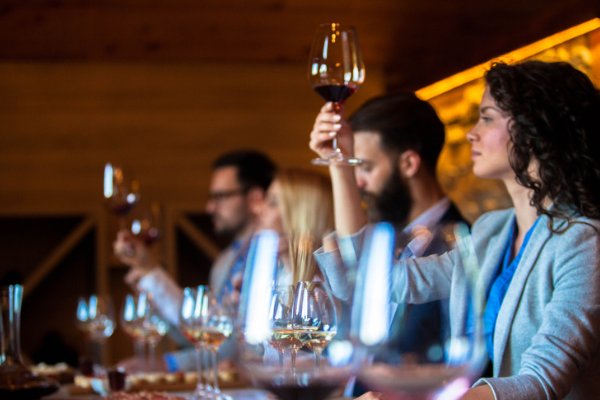
When assessing spirits, observe appearance, aroma, and flavour or mouthfeel. Compare, for example, how gin and whisky differ in aroma and profile. The Drinks Knowledge 1 textbook covers the characteristics of 11 different beverages. This gives you a solid framework for recognising attributes and offering a fitting explanation when an order is placed.
Tasting and describing help you articulate what you experience. Put into words what you smell and taste without overwhelming the guest with technical jargon.
Knowledge of cocktails
With cocktails, focus on the balance between the spirits and other ingredients. A blend might taste crisp, bitter, herbal, or sweet. Ask which flavour profile the guest prefers, and then describe the character of a suitable cocktail. That way, you provide genuine advice rather than just reading a name off the menu.
Also notice how aroma and mouthfeel shape the initial impression. These observations help keep your explanations relatable and personal.
Knowledge of liqueurs
With liqueurs, it helps to evaluate aroma, flavour, and mouthfeel separately. Describe, for instance, whether a liqueur is predominantly herbal, fruity, or sweet. Then ask how the guest prefers to enjoy it—neat, over ice, or in a mixed drink. This is how you turn product knowledge into practical advice.
The secondary vocational elective module Drinks Knowledge 2 covers tasting, evaluating, recognising, and advising on alcoholic drinks in hospitality.
Knowledge of mixed drinks
Assess a mixed drink as a whole. Focus on the proportions of the ingredients and what the aroma and taste bring forward. A spicy mix calls for a different description than a fruity one. By explaining the composition clearly, you help guests choose based on their individual tastes.
Keep up with trends and professional knowledge surrounding alcoholic drinks. Want to expand your knowledge even further? Take a look at the courses on drinks.
WTOL Academy: SVH Beer 1 & 2
With SVH Beer 1 & 2, WTOL Academy provides an ideal next step if you want to deepen your beer knowledge for the hospitality sector. Alternatively, choose SVH Spirits 1 & 2 if you want to learn more about hard liquors. For guest-facing skills, SVH Host / Hostess and SVH Social Hygiene tie in seamlessly with other areas of hospitality.
Prefer to learn independently or broaden your knowledge across multiple categories? The Wine / Beer / Spirits e-learning offers a digital learning format for these subjects. First, consider what expertise you need in your day-to-day role: recognising drinks, advising guests, or refining your hospitality skills. Then pick a course that aligns with your learning goals and position in the industry.
Explore the offering or get in touch with WTOL Academy to map out your next learning step.
Take your next step in professional development
Turn your passion for hospitality drinks knowledge into a concrete learning goal. Decide what you want to strengthen in your day-to-day work: greater confidence when recommending wine, deeper insight into beer, or expertise in spirits. A targeted course helps you shape that progression step by step and apply your professional skills confidently with guests.
For wine expertise, WTOL Academy offers SVH Wine 1, SVH Wine 2, and SVH Wine 3 (Wine Certificate). Which level suits you best depends on your background and what you want to achieve. Browse the course portfolio and find the path that matches your ambitions.
View WTOL Academy courses and take your next step with confidence. Your professional growth begins with curiosity.
Frequently asked questions about drinks knowledge in hospitality
What does drinks knowledge in hospitality involve?
Drinks knowledge means being able to recognise, assess, and clearly explain drinks to guests. In practice, this comes in handy when someone asks about the difference between two beers or requests an alcohol-free alternative. You also understand how product knowledge, menu design, and table service connect, allowing you to provide clear information to both colleagues and guests.
Which beer styles and serving temperatures should hospitality staff know?
Hospitality staff benefit from knowing a wide range of beer styles, such as pilsner, wheat beer, tripel, and stout. Their flavours and profiles vary considerably; describe them clearly when a guest is undecided. There is no single serving temperature that suits every beer, so learn the brewer’s recommendation and adapt your serving style to the beer type.
How do you recognise and serve spirits and liqueurs?
Start with the product name and provenance on the label, then pay attention to aroma, colour, and flavour. Pour the drink into glassware suited to the serving style and briefly tell the guest what they can expect. Ask, for example, whether they prefer to drink it neat or mixed. This keeps your explanation helpful without relying on heavy jargon.
Which food and drink pairings are popular in hospitality?
A pairing usually works well when the intensity of the drink matches that of the food. Think of a crisp cider alongside a savoury tart, or an aromatic beer paired with a spicy dish. Suggestions like these are starting points rather than rigid rules. Always ask about flavour preferences and offer an alternative if a guest prefers something milder or alcohol-free.
What rules apply in the Netherlands regarding serving alcohol in hospitality?
According to the Dutch government, hospitality venues are not permitted to serve alcohol to anyone who is visibly intoxicated. That means staying alert throughout guest interactions, not just when taking an order. Refuse service calmly and clearly whenever necessary. Agree in advance within your team on how staff will support one another and handle such situations professionally.