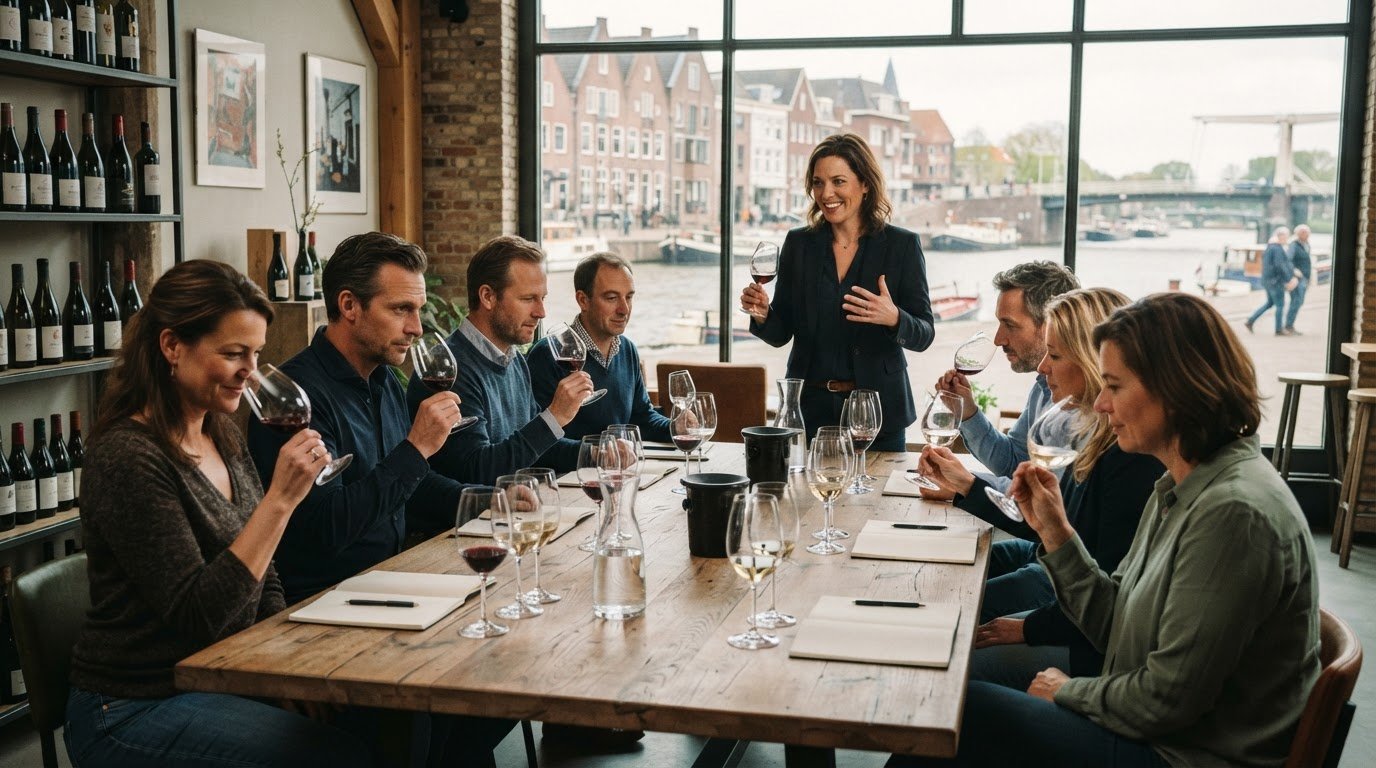


Do you already need to know a lot about wine to taste it with pleasure and attention? Not at all. If you are looking for an inspiring wine tasting, such an experience is actually a welcoming, accessible introduction: you discover what you smell and taste, without needing specialist jargon. That way, an enjoyable social experience also becomes an opportunity to learn to look, smell, and taste more mindfully.
The difference often lies in your attention. During a structured tasting experience, you pause to reflect on the wine’s characteristics and learn to recognise them better. In this article, you will discover what makes a wine tasting educational, how to taste with greater confidence, and when a formal course is right for you. If you want to take things beyond a one-off experience, you can deepen your knowledge at WTOL Academy, from foundation courses right through to advanced qualifications.
Key Takeaways
- You don’t need any prior knowledge: curiosity and attention are a great starting point for a wine tasting.
- Use a consistent tasting sequence to recognise and articulate your impressions more easily.
- Your personal observations about aroma and flavour are valuable. There are no exam-style right answers.
- Want to understand wine more systematically? Discover whether SVH Wine 1 is the right next step for you.
What makes a wine tasting interesting if you have little wine knowledge?
You don’t need to be a wine expert to enjoy tasting. A wine tasting is a guided or independent moment where you mindfully explore wines, rather than simply drinking them. Prior knowledge is unnecessary: curiosity and attention are all you need to spot differences and discover new flavours.
Tasting means attentively looking at, smelling, and experiencing wine to discover what you notice about it. Just drinking is mainly about enjoying the glass itself. That mindful distinction makes a tasting both accessible and educational. You don’t need to know straight away which region a wine hails from or which grape it is made of. Start with what you observe yourself.
What can you gain from a wine tasting as a beginner?
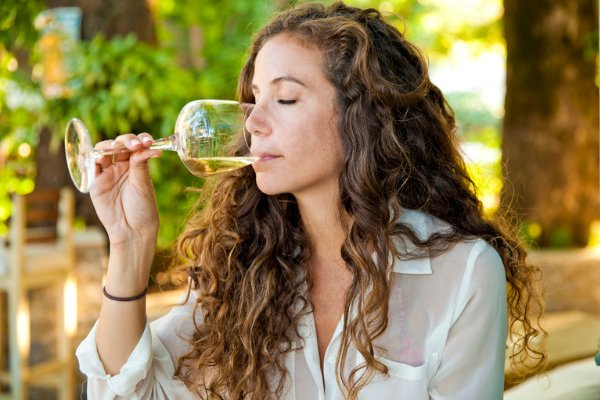
First, look at the colour and clarity. Next, smell gently: does the aroma remind you of fruit, flowers, or herbs? Then take a sip and pay attention to how the wine tastes and feels on your palate. One wine might come across as crisper, whilst another might feel fuller or softer. You don’t have to describe these impressions using technical terms right off the bat.
Your own perception is the starting point. Words like "crisp", "fruity", or "robust" help you describe what you experience, even if you don’t yet know what a sommelier would call it. There are no textbook answers: different people can experience the exact same wine quite differently.
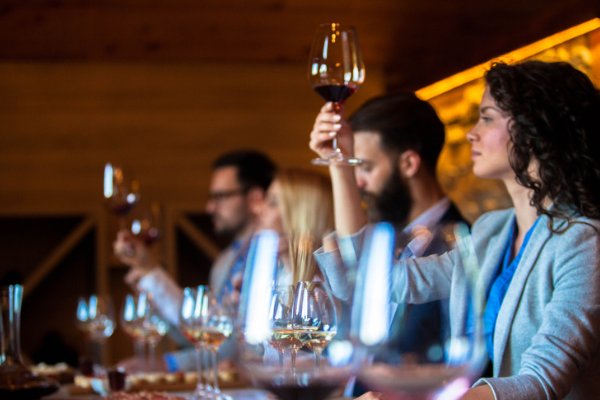
Make it a learning experience by asking yourself small questions: what catches your attention first, and does the aroma differ from the taste? At a guided tasting, you can ask questions and compare notes with others. For example, begin with a concrete comparison: which wine smells more fruity, and which feels fuller? That way, you taste attentively without losing the fun to complicated theory. Every mindful observation gives you something to build on.
How do you taste wine more mindfully and get more out of every glass?
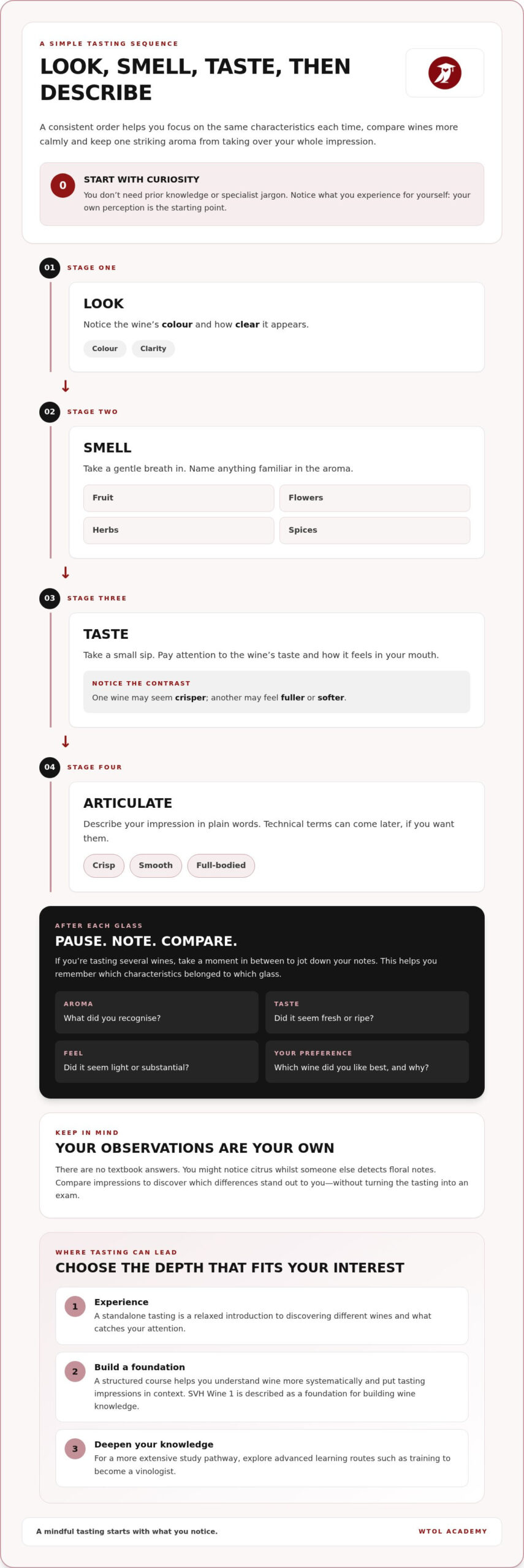
A consistent tasting sequence stops you from getting your impressions muddled. You take your time for each step and focus on the same characteristics each time. This allows you to compare wines more calmly and prevents one striking aroma from dominating your entire impression.
- Look: pay attention to the colour and how clear the wine appears.
- Smell: take a gentle breath in and name what you recognise, such as fruit, flowers, or spices.
- Taste: take a small sip and notice how the wine tastes and feels in your mouth.
- Articulate: describe your impression in plain words, such as crisp, smooth, or full-bodied.
By sticking to the same sequence, you will find it much easier to compare your impressions from glass to glass. If you are tasting several wines, take a moment in between to jot down your notes. That way, you will easily remember which characteristics belonged to which glass.
Your observations don’t have to match anyone else’s. Aromas and flavour impressions are deeply personal, not exam questions. So write down whatever you notice, even if you can’t find the exact technical term yet. Compare your notes later and discover which differences stood out to you most.
What kind of tasting notes help you recognise flavour better?
Keep your notes simple. Jot down an aroma you recognise, whether the taste strikes you as fresh or ripe, and whether the wine feels light or substantial. You can also write down which wine you liked best and why. Words like these give you a solid reference point without requiring complex jargon. Compare your notes with others afterwards: you might smell citrus, whilst someone else detects floral notes. That contrast can really sharpen your palate.
Want to find further inspiration in the world of wine and hospitality? Give the WTOL podcast about wine and hospitality a listen. If you are looking for more structure alongside that, find out how a wine course can match your interests.
From wine tasting to greater wine knowledge: when is a course right for you?
A standalone tasting experience gives you a relaxed introduction to wine. You find out what you enjoy and what catches your attention. If you mainly want to taste more mindfully every now and then, you can let that experience develop naturally. If you also want to understand why wines differ, a structured course can provide greater clarity.
Your choice depends on the depth you are looking for:
- Experience: choose a standalone tasting if you simply want to discover different wines.
- Build a foundation: a course gives you the tools to understand wine more systematically and place your tasting impressions in context.
- Deepen your knowledge: if you are already purposefully expanding your wine knowledge, explore which advanced learning route matches your goals.
Want to start with a clear foundation? SVH Wine 1 is an excellent first step to build your wine knowledge in a structured way. You connect what you taste to underlying theory, learning to look beyond personal preference alone. Take a look at the SVH Wine 1 course to see if this foundation suits you.
Which next step suits your interest in wine?
Think primarily about what you want to achieve with your knowledge. If you want more confidence when tasting, a foundation course might be ideal. If you are keen on an extensive study pathway, read up on training to become a vinologist. That is an excellent progression route for anyone wanting to immerse themselves deeper into wine. You can also explore the various wine courses to compare the different learning paths side by side.
Give your passion for wine room to grow
A mindful tasting experience can easily spark a lasting interest. Perhaps you simply want to choose what you drink with greater confidence, or maybe you relish the idea of understanding what you taste in ever greater detail. You don’t have to decide on an ultimate goal right away. Let your curiosity guide your next step.
Would you like to learn with clear, step-by-step guidance? WTOL Academy offers SVH-accredited wine courses, featuring classroom sessions as well as e-learning options. The wine qualification pathway runs from SVH Wine 1 all the way to SVH Vinologist, allowing you to choose a learning path tailored to your ambitions. For a guided first step, WTOL Academy also provides engaging wine workshops.
Discover the wine courses at WTOL Academy and see which step will take your interest further. Every new discovery helps you enjoy wine with greater insight and pleasure.
Frequently Asked Questions about Wine Tasting
Is a wine tasting suitable if you have no wine knowledge?
Yes, you can join without any prior knowledge and decide entirely for yourself how much you want to share. Finding it tricky to describe what you taste? Start with a simple preference, such as which wine you would happily drink again. That gives you a tangible reference point and makes it easier to work out later what made that wine appealing to you.
How do you taste wine without using complicated jargon?
Describe what you experience just as you would explain it to a friend. You could say that a wine reminds you of ripe fruit or that the flavour lingers pleasantly on your palate. This keeps your personal impressions clear without needing to master industry terminology first. You can always look up more specialised terms later to match what you noticed.
What is the difference between a wine tasting and a wine course?
A tasting is primarily a one-off introduction, whereas a course helps you build knowledge systematically over time. Consider what you are after: are you looking for a relaxed, sociable activity, or do you want to learn how grape varieties, winemaking techniques, and flavours connect? Clarifying that goal makes it much simpler to choose the right option.
Can you also build wine knowledge online?
Yes, online learning is a very practical way to build your wine knowledge. WTOL Academy offers wine e-learning programmes. You can then connect this new knowledge directly to your own tasting experiences, for instance by reflecting on the characteristics you recognise after each glass. That brings your learning to life beyond the screen and allows you to broaden your appreciation step by step.