
Did you know that almost forty percent of hospitality entrepreneurs indicate that staff shortages directly hinder their daily operations? It’s a frustrating cycle; you urgently need people, but guiding new hospitality staff takes so much time that the quality on the floor often comes under pressure. You’ll surely recognise it: new recruits making mistakes during peak hours or leaving after just a few weeks because they can’t find their way in the hustle and bustle.
The good news is that a structured onboarding process can completely turn this around. In this article, you’ll discover how, with the right training and a clear approach, you can get your team working independently faster and reduce onboarding costs. We delve into the world of professional competence, from the power of a good master instructor to the use of flexible e-learning. This way, you ensure your staff welcome guests with confidence and genuine hospitality, whilst you maintain calm on the shop floor.
Key Points
- Learn how a structured onboarding process reduces the error margin during peak times and ensures higher staff retention.
- Discover practical steps for guiding new hospitality staff from day one, from arranging a buddy to conveying the company culture.
- Understand why SVH certifications are the gold standard for quality and how to motivate staff with a clear career path.
- Discover the crucial role of the SVH Master Instructor as a coach and trainer to ensure professional competence within your team.
- See how the combination of e-learning and practical lessons ensures an efficient and flexible learning process for busy professionals.
why guiding new hospitality staff is essential for your business
In a sector where almost 40% of entrepreneurs struggle with staff shortages, you simply cannot afford to lose talent. Successfully guiding new hospitality staff begins with the realisation that the first few weeks are crucial for the rest of their career with you. If a starter feels supported from day one, the chance of a long-term collaboration increases significantly. This has everything to do with the socialisation process, where someone not only learns the tasks but also embraces the unwritten rules and culture of your establishment. Without this foundation, there is often ambiguity about responsibilities. This leads to irritation within the team and ultimately to a negative working atmosphere that your guests will also notice.
However, a structured onboarding process does more than just maintain the atmosphere. It is your strongest weapon against mistakes during peak hours. When an employee knows exactly what the protocols are, quality remains consistent, even when the terrace is full. Moreover, you will see a direct increase in the average spend per guest. An employee who feels confident and knows the menu by heart is more likely to upsell. Thus, good guidance directly translates into higher turnover.
the impact on the guest experience
Guests come for an experience, not just a drink. Uncertainty among your staff directly affects the guest’s experience. If a new colleague is unsure about the ingredients of a dish or doesn’t know which wine pairs with the fish, the guest loses confidence in the service. It is therefore essential to maintain uniform service standards from day one. By directly investing in product knowledge, such as the details of the drinks menu, you increase the starter’s self-confidence. A confident hostess or host creates a relaxed atmosphere at the table, which directly boosts guest satisfaction.
cost savings through effective onboarding
a flying start: the first days of the onboarding process
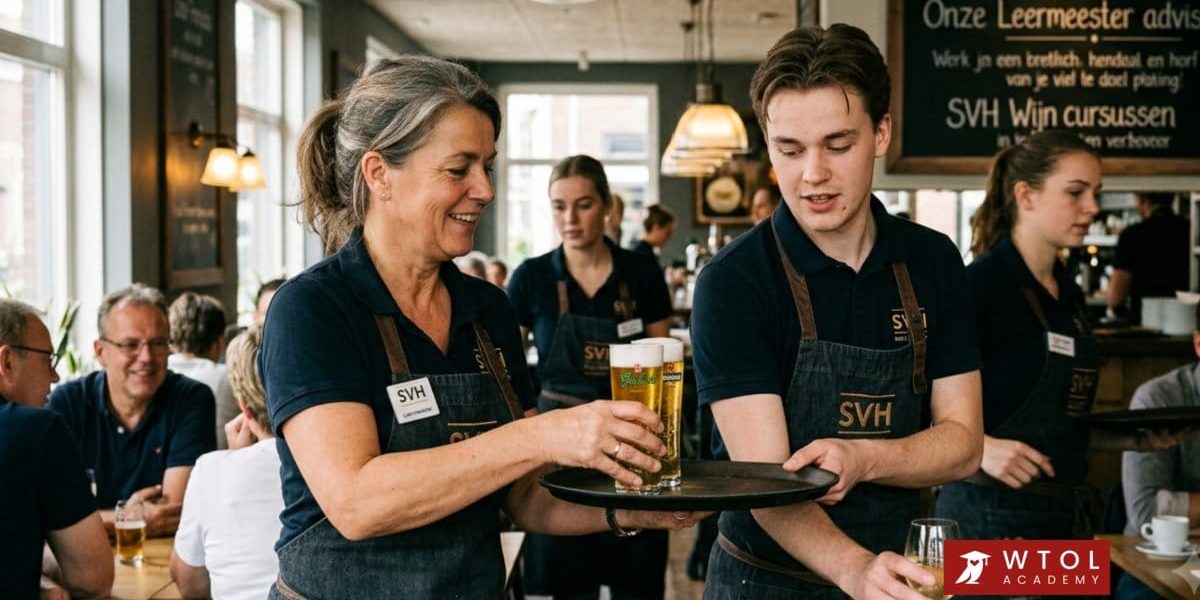
The first impression a new colleague gets of your establishment is crucial for the rest of their career. Research by KHN shows that staff retention is currently the most important success factor for hospitality entrepreneurs. Successfully guiding new hospitality staff therefore begins even before the first shift. Nothing is as demotivating as a starter who has to wait for appropriate work clothing on their first day or doesn’t yet have login details for the till system. Ensure these practical matters are arranged and assign a permanent buddy. This experienced colleague acts as the first point of contact, which significantly lowers the threshold for asking questions.
On the first day, the company culture is central. Take an extensive tour of the establishment together and tell the story behind your concept. What is the mission? Why do guests specifically come to you? By presenting the menu not just as a list of dishes, but as the pride of the kitchen, you immediately generate enthusiasm. Always conclude the first few days with a brief feedback session. By asking how the employee experienced the first few hours and where the bottlenecks lie, you manage expectations on both sides and prevent early attrition.
social hygiene and safety as a foundation
In hospitality, you bear a great responsibility, especially when it comes to serving alcohol. Immediately inform new employees about the basic rules of the Alcohol Act and the internal protocols for age verification. A safe working environment begins with knowledge. It is essential that everyone on the floor understands why we adhere to certain rules.
the human side of hospitality
Hospitality is more than just technique; it’s a feeling. Teach your new employees from the start to truly connect. This begins with the basics: making eye contact upon arrival and an open body posture. Etiquette such as serving from the right side and correctly presenting drinks are skills you can practise directly. Especially in the first few weeks, it’s important to also consider difficult situations. How do you respond to a complaint? By discussing this together, you give the starter the confidence to make independent decisions. With the right hospitality training courses, you ensure that this hostmanship becomes an integral part of your team.
professionalisation through training: the role of SVH courses
Real growth in your team occurs when you look beyond just the daily tasks on the floor. Guiding new hospitality staff gains an extra dimension if you directly use training as a motivator. In Dutch hospitality, an SVH certification is the absolute gold standard for quality. By offering your staff a clear career path, you show that you are investing in their personal development. This not only ensures professionally competent staff but also retains talent longer within your business. An employee who holds an official diploma radiates more self-confidence, and guests immediately notice this at the table.
Thanks to modern learning methods, training doesn’t have to be a huge drain on your schedule. The combination of e-learning modules and practical lessons makes it possible to acquire knowledge without leaving the shop floor for long periods. Employees can review the theory in their own time via digital education, and then immediately apply this knowledge during their shift. This efficient approach ensures that starters reach the desired level faster, which reduces pressure on the rest of the team and professionalises the overall image of your hospitality establishment.
from basic knowledge to expertise
Every starter benefits from a solid foundation. When a new colleague knows the difference between the various drinks on the menu, the quality of service immediately increases. Consider, for example, the importance of wine knowledge. A course such as SVH Wine 1 not only teaches employees about grape varieties but also gives them the tools to actively advise and stimulate sales. An employee who can passionately talk about a specific wine simply sells more. Are you curious about what steps your team can take? Then view our full range of hospitality training courses to get off to a flying start.
social hygiene as an obligation and opportunity
The law sets clear requirements for the presence of employees with knowledge of social hygiene. But instead of seeing this only as a legal obligation, you can also use it as an opportunity for team building. Jointly following a course strengthens team cohesion and ensures that everyone speaks the same language when it comes to safety and responsibility. It is an essential part of professional business operations. If you want to know exactly when and how your employees can obtain their social responsibility certificate, read our current overview for 2026.

the master instructor as the linchpin in the guidance process
An SVH Master Instructor is much more than an experienced professional who happens to onboard a new colleague. They are a certified mentor who methodically imparts the tricks of the trade. Guiding new hospitality staff thus becomes a structured process instead of a coincidental series of events. A master instructor fulfils four crucial roles: that of instructor, coach, assessor, and advisor. By consciously employing these roles, you ensure that a starter does not feel thrown in at the deep end but gradually grows towards full independence.
The core of the methodology lies in the transition from ‘demonstrating’ to ‘doing it yourself under supervision’. You start by showing the action, then the starter does it with you, and finally, you let go whilst remaining in the background for questions. This gives the new employee space to build self-confidence without losing the safety net. A good master instructor also draws up an individual learning plan. Someone who already has experience in service, after all, has different goals and a different pace than a student starting their first part-time job.
coaching on the shop floor
Feedback is the fuel for growth. As a master instructor, you provide constructive feedback, not just at the end of the shift, but precisely at the moments it happens. Create a safe learning environment where making mistakes is seen as an essential learning moment. If a glass breaks or an order is incorrectly entered into the till, that is an opportunity to calmly discuss how we can prevent this next time. Also, recognise the different learning styles of your team. One person learns by observing, whilst another wants to get their hands dirty immediately. By adapting your style, you significantly accelerate the learning process.
becoming a master instructor yourself
Investing in a master instructor training course is a smart move for your most experienced staff. It offers them a new career perspective and elevates the quality of your entire team. A certified mentor creates calm on the floor because everyone knows exactly where they stand. Do you want your mentor to delve even deeper into craftsmanship? Then becoming a Vinologist is a wonderful next step to secure product knowledge within your company. Are you ready to elevate the guidance within your business to the ‘gold standard’? Then immediately check out our training courses for hospitality professionals.
Invest in the future with WTOL Academy training courses
Professionalising your staff is not a one-off action, but a sustainable investment in the value of your business. WTOL Academy acts as the experienced guide that helps you achieve that coveted gold standard in hospitality. We combine the depth of traditional mastery with the speed of modern educational forms. Guiding new hospitality staff becomes much more effective when you let theory and practice go hand in hand. By having employees lay the foundation through flexible e-learning, they can immediately convert that knowledge into action on the shop floor. This accelerates the learning process and ensures a team that confidently approaches guests.
Every hospitality business is unique and requires its own approach. That’s why we offer customised solutions that seamlessly align with your specific concept. Whether you run a small bistro or manage a large hotel complex, we think along with you about a training plan that yields results. You can start professionalising your onboarding today by making training an integral part of the induction process. This way, you show new talents that there is room for personal growth and true professional competence within your company.
Our approach for your team
At WTOL Academy, the passion for the hospitality craft is central. We support you in making the right choices for different roles within your team. An employee in service, after all, has different needs than a bartender or a floor manager. Our focus is always on officially recognised standards, so you can be sure that quality is guaranteed. Do you want to take immediate steps with your staff? Then enrol in one of our SVH training courses and experience how professional competence positively influences the atmosphere and turnover in your establishment.
Conclusion: guidance is a profession in itself
Successfully guiding new hospitality staff is the result of a warm welcome, a tight structure, and the right educational support. We have seen that a good start lays the foundation for loyalty and that a master instructor is the linchpin in this process. Therefore, make learning part of the daily routine on the floor. If employees can constantly improve themselves, the work remains challenging and the service at the highest level. Are you ready to take your team to the next level? Contact us for a customised training plan and invest in the future of your business.
build tomorrow’s hospitality team today
The success of your business stands or falls with the people on the floor. By combining a structured onboarding process with officially recognised training, you transform new recruits into confident ambassadors for your company. Guiding new hospitality staff is not an administrative task, but an opportunity to pass on craftsmanship and passion. When you invest in a certified master instructor and a clear career path, you not only reduce the error margin during peak times but also increase hospitality and ultimately turnover.
Are you ready to elevate the quality within your team to the highest standard? As an SVH-accredited training institute, WTOL Academy helps you with the highest pass rates in the sector. Our experienced professionals from the field are ready to guide your employees towards official professional diplomas that truly add value on the shop floor. **view all WTOL Academy hospitality training courses ** and discover the possibilities for your business. Make learning an inspiring success experience and watch your team grow stronger every day.
frequently asked questions about onboarding hospitality staff
how long does it take on average to onboard a new hospitality employee?
On average, it takes two to four weeks for a new recruit to independently master the basic processes and the menu. Full integration, where the employee also maintains the desired speed and quality during extreme busy periods, often takes three months. Guiding new hospitality staff is therefore a long-term process; continue to schedule regular feedback sessions even after the first month to stimulate growth.
is a social hygiene diploma mandatory for all new employees?
No, it is not legally mandatory for every employee to possess this diploma, but there must always be at least one person with an SVH Social Hygiene certificate present on the premises. For managers and entrepreneurs, it is a strict requirement for the operating licence. However, it is smart to train multiple team members so that you are more flexible in your roster and safety on the floor is always guaranteed.
what are the most important skills a starter in hospitality should learn?
The three core skills for every starter are hospitality, product knowledge, and efficient working. A new colleague must learn how to truly welcome a guest whilst simultaneously maintaining an overview of different tables. In addition, knowledge of etiquette, such as serving from the right and correctly presenting the menu, is essential to make a professional impression on the guest from day one.
how can I objectively measure the progress of a new employee?
You best measure progress by working with an onboarding checklist linked to concrete learning objectives per week. Assess the employee on measurable aspects such as the accuracy of till entries, the speed of serving, and interaction with guests. By discussing these points weekly whilst guiding new hospitality staff, you make the development transparent for both the starter and the master instructor.
why should I invest in an svh training course for my staff?
Investing in an SVH training course increases your team’s professional competence and significantly reduces staff turnover. Employees who are given the opportunity to obtain an officially recognised diploma feel valued and are more committed to your business. Moreover, the extra knowledge about wine, beer, or hostmanship directly translates into a more professional image and a higher average spend per guest.
what is the role of a buddy during the onboarding process in hospitality?
A buddy acts as the informal point of contact for all practical questions and helps the new colleague to socially integrate into the team. This experienced employee conveys the unwritten rules and company culture, which lowers the threshold for asking for help. This relieves the manager and ensures that the starter feels safer and more comfortable on the shop floor more quickly.
how do I deal with employees who struggle with the menu?
Let employees taste the dishes and drinks themselves and organise short, playful quizzes to test their knowledge. Use flashcards for allergens and ingredients or implement a digital learning environment where they can practise at their own pace. If an employee truly understands the menu, their confidence at the table increases, which directly leads to better advice and more enjoyment in their work.
can I also offer the onboarding process entirely digitally via e-learning?
Whilst e-learning is ideal for conveying theoretical knowledge and company protocols, a fully digital process in hospitality is not effective. The profession revolves around physical skills and human interaction that can only be learned on the floor. A hybrid approach, where digital modules lay the foundation and the master instructor demonstrates the finer points in practice, yields the highest return.